

Exploring The Next Step
Everyone’s journey is different, and there is no single path that works for everyone. In my work, I aim to offer a supportive and thoughtful space for both individuals seeking therapy and clinicians looking to develop and reflect on their professional practice.
If you are unsure which approach may be right for you, I offer a free 15-minute introductory consultation so we can think together about what might feel most helpful for you.

EMDR Therapy
Eye Movement Desensitisation and Reprocessing is a well-established psychological therapy that helps people recover from the effects of trauma and distressing life experiences. It is recommended by the National Institute for Health and Care Excellence as an effective treatment for PTSD.
EMDR helps the brain process difficult memories so they no longer feel overwhelming or stuck in the present. Many people find that as therapy progresses, memories begin to feel less emotionally intense, allowing them to move forward with greater ease, stability, and confidence.
How EMDR Works
When experiences are overwhelming, memories can sometimes become “stuck” along with the emotions, images, and beliefs connected to them.
During EMDR therapy we gently work with these memories while using bilateral stimulation such as guided eye movements or tapping. This helps activate the brain’s natural processing system so that the memory can be integrated in a healthier way.
The aim of EMDR therapy is not to erase memories, but to help them feel more settled and manageable.
What EMDR Can Help With
Although EMDR was originally developed to treat PTSD, it is now widely used to help people experiencing a range of other difficulties such as anxiety, depression, low self-esteem, phobias, and chronic pain. It is a versatile and adaptive approach that gets great results quicker than some other therapies.
Find Out More
If you would like to learn more about how EMDR works or what therapy may involve, you can find answers to some common questions by clicking on Learn More.

Cognitive Behavioural Therapy
Cognitive Behavioural Therapy is a well-established and practical form of psychological therapy recommended by the National Institute for Health and Care Excellence for a range of mental health difficulties.
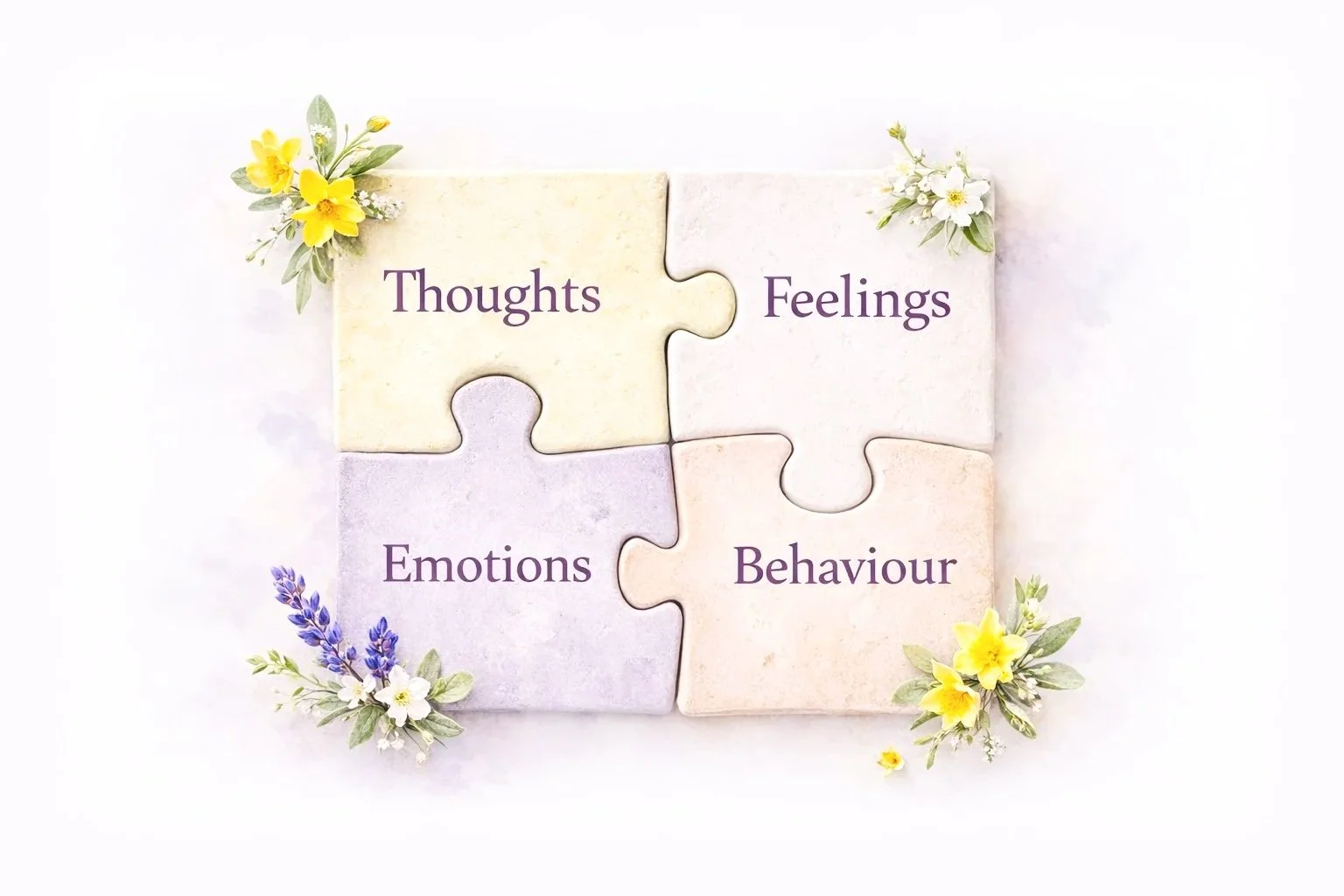
CBT focuses on the links between our thoughts, emotions, behaviours, and physical responses. When life becomes difficult, these patterns can sometimes start to work against us and keep problems going. CBT helps us notice these patterns and develop more helpful ways of responding, so that things can begin to feel more manageable again.
How CBT Works
CBT is mainly focused on what is happening in the present and finding practical ways to improve how things are now. At the same time, it can be helpful to understand how certain patterns may have developed over time.
Sometimes earlier life experiences shape the beliefs we hold about ourselves or the rules we feel we have to live by. In therapy, we can take time to understand these patterns and how they may still be influencing the way you think, feel, or respond to situations today.
Together, we look at what may be maintaining the difficulty and explore new ways of thinking and responding that feel more balanced and supportive. The aim of CBT is not to remove life’s challenges, but to help you feel better equipped to face them with greater clarity and confidence.
What CBT Can Help With
CBT can be helpful for a wide range of difficulties, including anxiety, depression, low self-esteem, stress, panic, phobias, and obsessive or repetitive thinking patterns. It can also support people who feel stuck in unhelpful cycles or overwhelmed by the pressures of everyday life.
Find Out More
If you would like to learn more about how CBT works, if it is the right therapy for you or what therapy may involve, you can find answers to some common questions below.
Clinical Supervision
I offer clinical supervision for therapists working with both EMDR and Cognitive Behavioural Therapy. Supervision provides a supportive and reflective space to think together about clinical work, build confidence, and continue growing as a practitioner.
My approach to supervision is collaborative and thoughtful, creating space to explore clinical material, reflect on the emotional impact of the work, and strengthen therapeutic skills. It can also be a place to consider ethical questions, professional development, and the wider context of the work we do.
With over 15 years’ experience working in mental health, I bring a broad understanding of different clinical settings, including NHS Talking Therapies services, community services, and private practice. I offer both individual and group supervision and can support therapists working towards accreditation, including BABCP accreditation and EMDR Europe accreditation processes.
Find Out More
If you would like to learn more about supervision arrangements and fees, you can find further details by clicking on learn more.

Continuing Professional Development
Bespoke continuing professional development is available for services and teams seeking to deepen their understanding of trauma, trauma-informed practice and EMDR. Specialist areas include PTSD, complex PTSD, dissociation and stabilisation. Sessions are practical, reflective and clinically focused, supporting therapists to work more confidently with complex trauma and prepare clients for trauma-focused therapy. Where appropriate, sessions may be submitted for CPD recognition through professional bodies such as the EMDR Association or BABCP.
Training is also available for services wishing to deliver the evidence-based trauma stabilisation programme developed within NHS Talking Therapies. The programme uses psychoeducation, grounding and emotional regulation techniques to support people with PTSD and complex PTSD while they wait for trauma-focused therapy.
Workshops
I offer psychologically informed workshops and talks for retreats, workplaces and organisations. Drawing on over 15 years’ experience in mental health and trauma services, sessions combine evidence-based psychological knowledge with practical ways of understanding stress, trauma, PTSD, emotional regulation and resilience.
Topics may include understanding stress and its effects, nervous system regulation, recognising trauma responses, mindfulness, emotional resilience and practical strategies for maintaining wellbeing.
Sessions can be tailored for workplaces, healthcare services, police, military and other teams.
Find Out More
If you would like to discuss workshops or bespoke CPD sessions for your team, retreat, or organisation, please feel free to get in touch.

Testimonials